Franz Liszt tickles the ivories (and ebonies) at the MIM
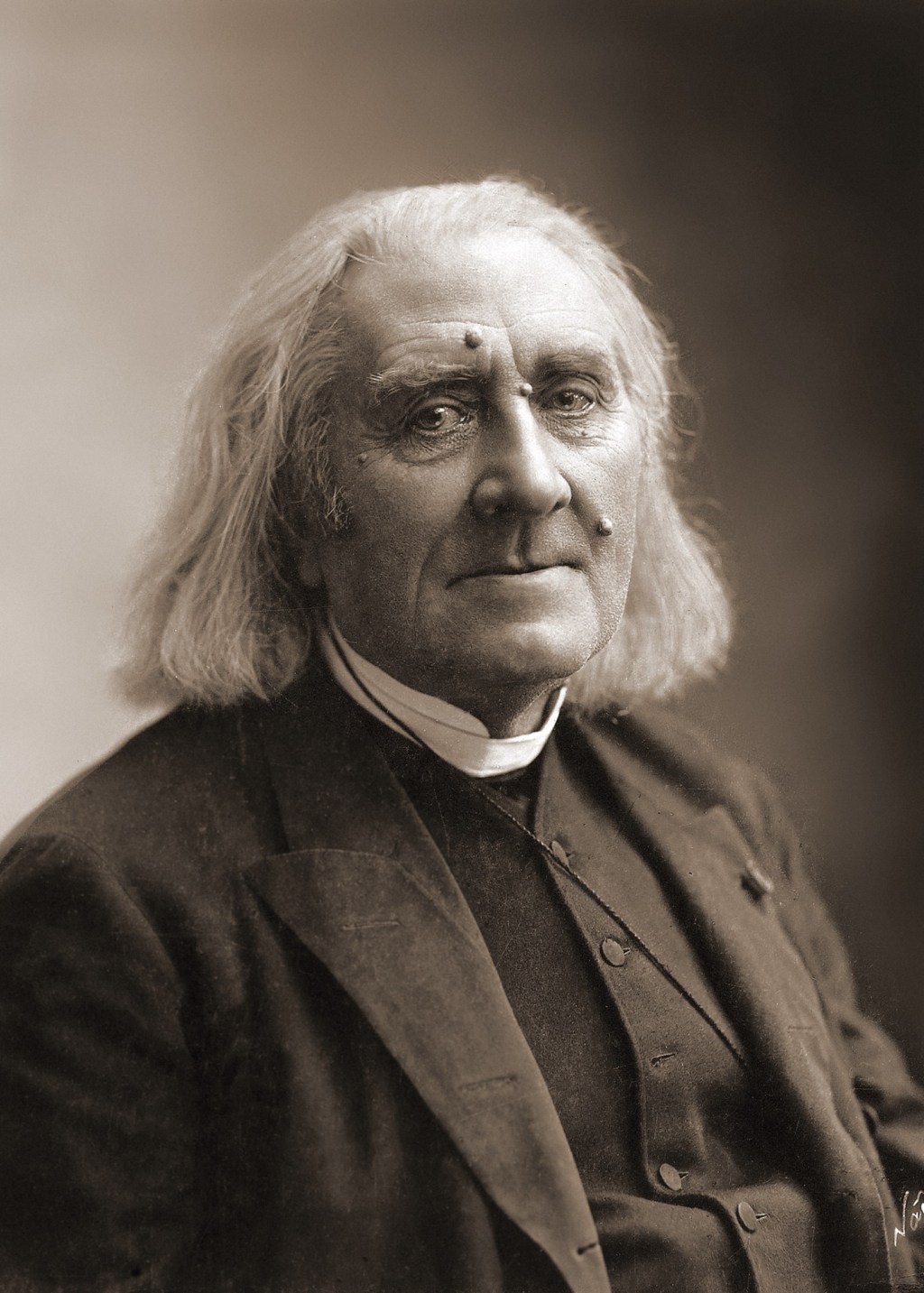
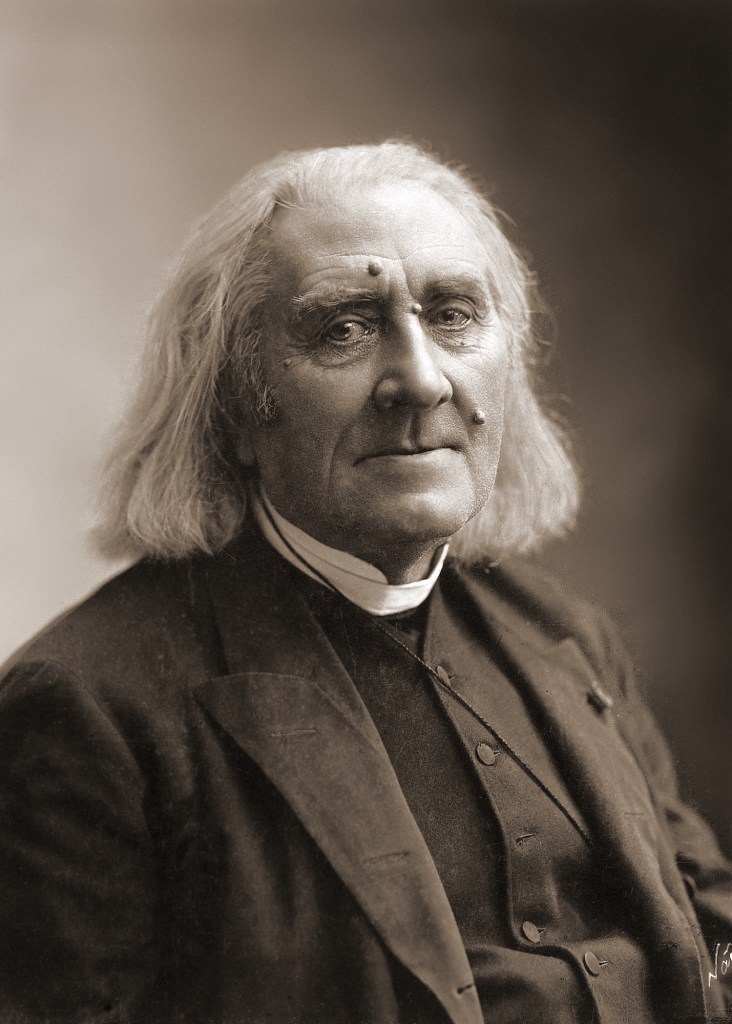
Franz Liszt, 1886
In June of 1881 the Hungarian pianist and composer Franz Liszt paid a visit to the Brussels Conservatoire. This visit came amongst an intense period of concerts organized in his honor across Belgium, notably the ‘Liszt Festivals’ in Antwerp and Brussels.
Nearly all the Belgian newspapers passed lightly over Liszt’s visit to the Brussels Conservatoire, merely mentioning that he had visited a piano class and the musical instruments museum. Even more surprising is that the director of the museum, Victor-Charles Mahillon, did not mention the visit in his own publication L’Echo Musical. We learn from the museum’s guest book (which sadly Liszt did not sign) that the MIM had just moved to its new location at 11 rue aux Laines a month earlier. The director of the conservatoire, François-Auguste Gevaert, was undoubtedly eager to show the virtuoso this new location and the collection of keyboard instruments.
Rue aux Laines, Brussels – the former location of the MIM
La Meuse, a newspaper of Liège, gives us a much more detailed description of Liszt’s visit:
The visit of Liszt to the Royal Conservatoire of Brussels and its Musical Instruments Museum was of great interest. The first class which the great artist entered, we learn, was the piano class of Auguste Dupont where Mr. Gevaert, who guided Liszt, showed him his name written amongst the great keyboard masters. Mr. Dupont thought that the best welcome he could provide to the illustrious visitor would be to have him hear one of his most famous works: the concerto in E-flat, played on two Erard pianos, by one of his favorite students, Mademoiselle Moriamé, whose talent we appreciated in Liège, and Mademoiselle Kesteloot, another distinguished student who played the second part.
The facade of the Brussels Conservatoire in 1910
Liszt, very satisfied, applauded on many occasions the intelligence and ease of execution of these young artists and warmly congratulated Mr. Dupont, their teacher, for his excellent pedagogy, an honor which the eminent professor can rightly be proud of. Just before Liszt had arrived, we heard several students of Mr. Dupont, even the youngest, play several of the most beautiful fugues of Bach by memory, with a cleanness and accentuation of the subject which was truly surprising. Liszt, after passing in other classes, entered the concert hall where Mr. Mailly played one of his melodies on the organ, which did not displease the Hungarian master.
Video – The Cavaillé-Coll organ of the Brussels Conservatoire played before its restorationThe concert hall of the Brussel Conservatoire
Leaving the concert hall, whose pleasing disposition was greatly appreciated by the master, he entered the rich Musical Instruments Museum which the Conservatoire possesses. Stopping before an ancient harpsichord with two manuals and four octaves plus one note, by Vincent Thibault of Toulouse, 1679, Mr. Gevaert played a prelude from the first fugue of The Well Tempered Clavier of Bach. When Mr. Gevaert had finished, Liszt, having removed one glove and remaining standing, began the following fugue, and then improvised on it which surprised and charmed all the visitors, among which was Mr. de Caraman, Prince of Chimay, the president of the Administrative Commission of the Conservatoire.
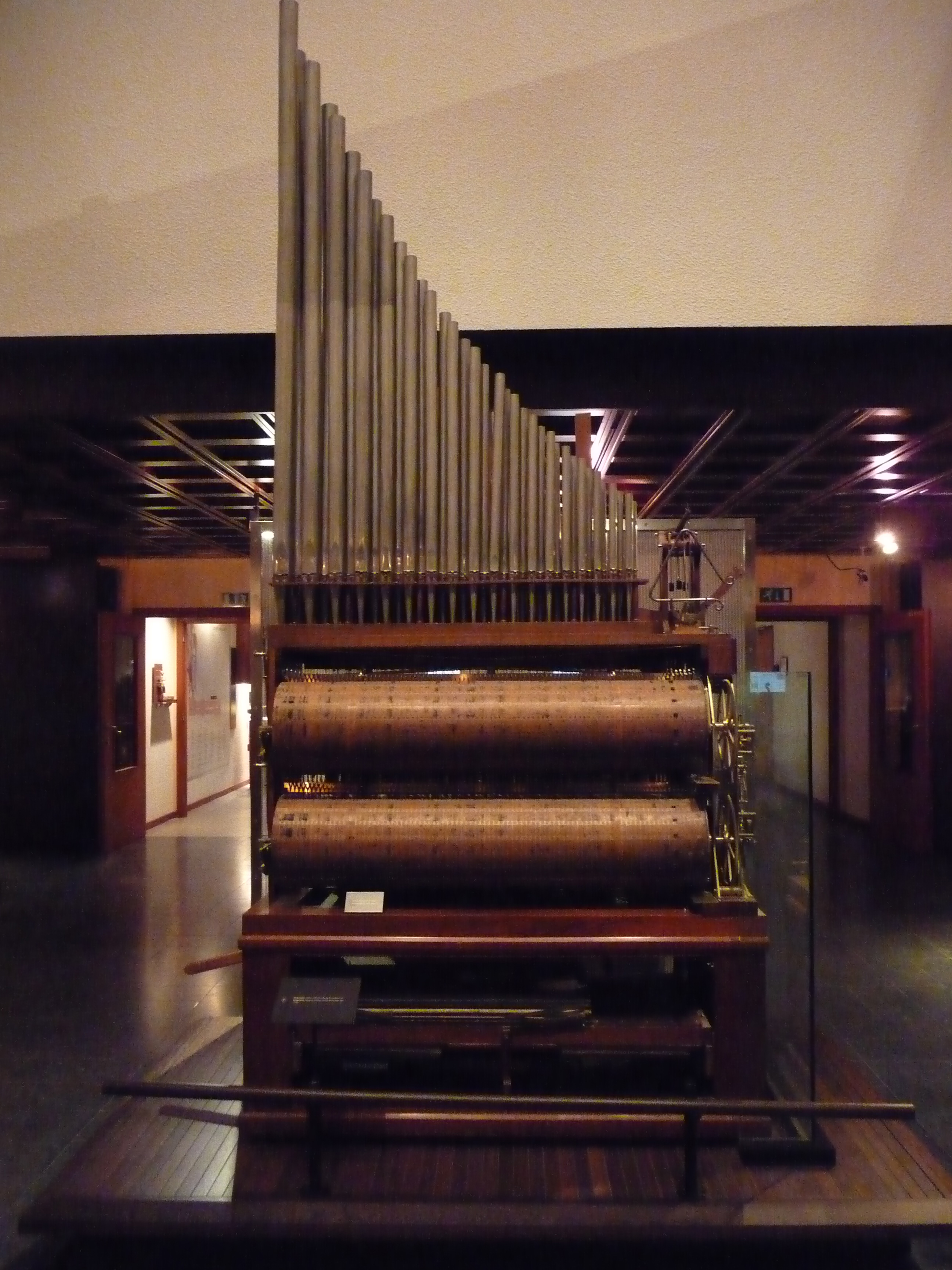
The Componium, MIM, Brussels
Liszt also examined with great interest a masterpiece of mechanica called the Componium formerly in the collection of Tolbecque, who was responsible for its reconstruction. The repertoire of this automaton is most curious.
He then listened to the unusual timber of a long trompette marine, then the brass sound of a wooden trumpet made by Mr. Mahillon the curator of the museum, in order to prove that the material used does not influence the formation of the sound. Adding valves to this sort of instrument would be the only difficulty.
This rich museum was started by the reception of the beautiful collection of instruments which Fétis, the famous music author, had acquired, followed by 98 instruments used in English India which the Rajah Sourindro Mohun Tagore, president of the Music School of Calcutta and distinguished musician, offered to the King in 1876, which were donated to the Museum of the Conservatoire.
What an extraordinary event! This was clearly a public visit to the conservatoire, most likely in the presence of notable figures who had organized the Liszt Festivals in Brussels and Antwerp. It is surprising that Liszt heard a female pianist perform his piano concerto. In fact, Zelia Moriamé was a twenty-three year old Belgian pianist who had finished her studies in 1877.
The new location of the MIM offered greater possibilities to exhibit its growing collection of European and non-European instruments to a select public. At the opening of the current building of the Brussels Conservatoire in 1876, we read that the instrument collection was being stored in the attics where they remained until 1881. Number 11 rue aux laines is a large stately home which offered a dozen rooms across two floors, as well as attics to store its collection and an annex which served as a workshop. We know from photographs that this building was already insufficient for the collection with instruments pilled on tables or on top of keyboard instruments.
The two instruments specifically cited in this article, the richly decorated harpsichord by Vincent Tibaut and the Componium are gems of the collection. The Componium in particular drew interest from across Europe from the time of its creation in 1821. This elaborate barrel organ was capable of playing a multitude of variations on a theme which would be chosen randomly by the mechanism. While it is no longer in playing condition, a smaller model was built which can be seen in this interesting video.
The Componium has a prized place on the first floor of the MIM, while the harpsichord by Tibaut is not currently displayed. In fact, until the start of the MUSIM project in December of 2023 it was not known that Liszt had played on this instrument!


 MUSIM
MUSIM 
Leave a comment